Guide · 10 min read
Low Carb Diet Plan for Prediabetes & Type 2 Diabetes

You do not need to count macros or chase strict keto to lower your blood sugar. A disciplined 20–30g net carbs per day plan — built around protein, non-starchy vegetables, and healthy fats — restores insulin sensitivity, flattens glucose spikes, and moves A1C in the right direction within weeks. This is the exact eating framework used inside the 12-Week Metabolic Comeback Method.
Why low carb works for prediabetes and type 2 diabetes
Type 2 diabetes and prediabetes are, at their core, problems of insulin resistance. Your cells have stopped responding to insulin's signal, so glucose stays in your bloodstream longer. Carbohydrates raise blood glucose the most, so cutting the load hard gives your body the chance to lower insulin, restore sensitivity, and start burning stored fat.
The goal is not zero carbs. The goal is a tight ceiling — 20 to 30 grams of net carbs per day — filled with vegetables, a small amount of berries, and generous protein and fat so glucose stays flat and hunger disappears.
How many carbs per day on this plan?
20–30g of net carbs per day. Net carbs are total carbs minus fiber. That range is low enough to drop insulin quickly and put most people into mild nutritional ketosis within 5–10 days, while still leaving room for a big pile of non-starchy vegetables and a small serving of berries.
If you are on insulin or a sulfonylurea, your medication will need to be reduced as glucose improves — often within the first two weeks. Work with your clinician before starting so you have a plan for lowering doses safely.
Foods to eat
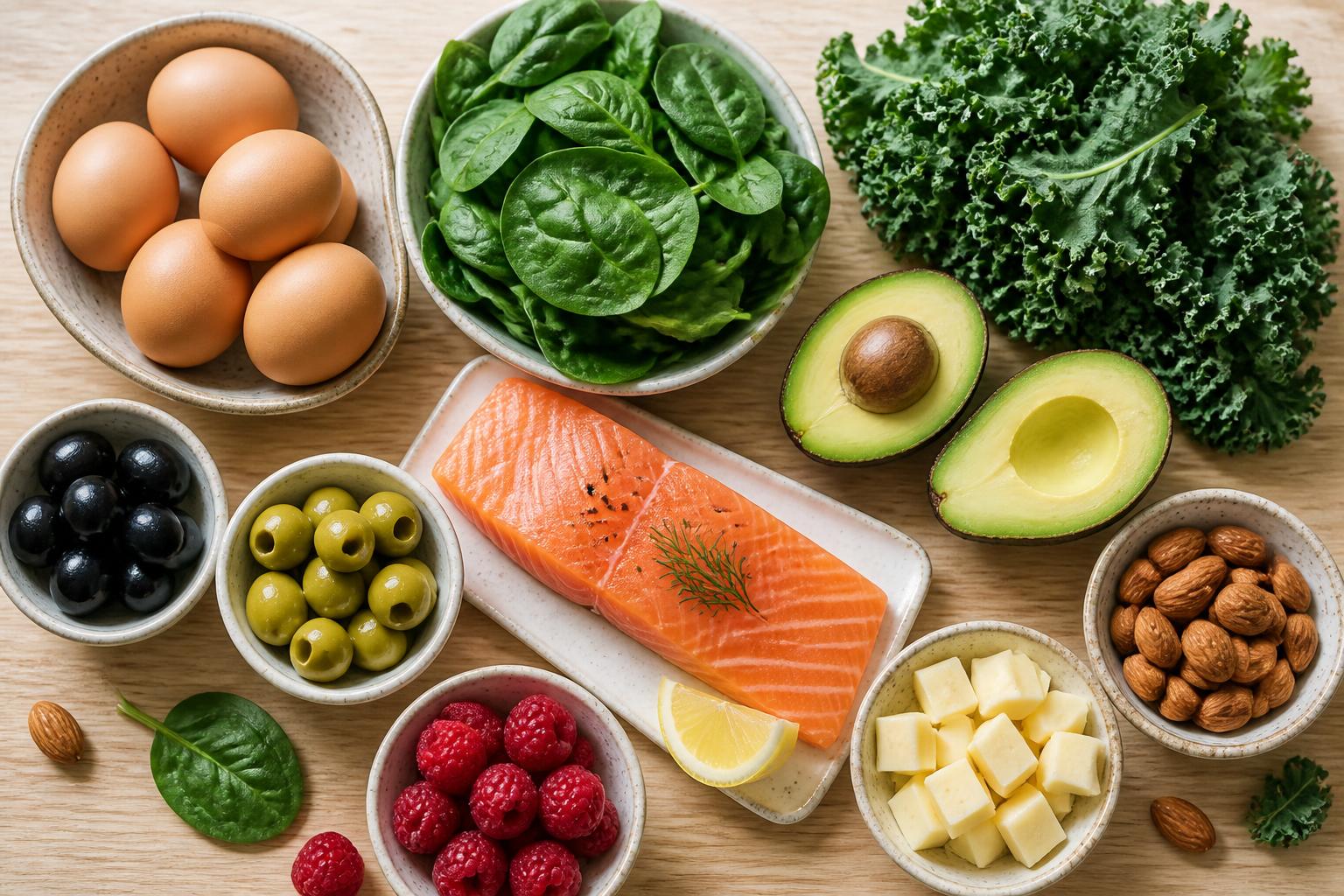
Build every plate around these foods. They stabilize glucose and keep you full inside a 20–30g carb ceiling.
| Food group | Good choices |
|---|---|
| Protein at every meal (30–40g) | eggs, chicken, fish, beef, Greek yogurt, tofu, cottage cheese |
| Non-starchy vegetables | leafy greens, broccoli, cauliflower, zucchini, peppers, mushrooms, tomatoes |
| Healthy fats | olive oil, avocado, nuts, seeds, fatty fish, butter, ghee |
| Hard cheeses and olives | near-zero carb, satiating, easy snacks |
| Berries (¼ cup/day max) | lowest-sugar fruit, high in fiber and polyphenols — the only fruit that fits 20–30g |
Foods to avoid
These foods either exceed your daily carb budget in a single serving or keep insulin high. Remove them for the first 12 weeks — you can reassess once your A1C is stable.
| Food | Why avoid it |
|---|---|
| Liquid sugar | soda, sweet tea, fruit juice, sports drinks, flavored coffees — the biggest glucose spikes |
| Refined starches | white bread, pasta, breakfast cereal, crackers, pastries, most snack food |
| Sweets and desserts | candy, cookies, ice cream, cakes — a single serving blows the daily budget |
| Beans, lentils, and legumes | high fiber, but even ½ cup uses your full daily carb allowance |
| Root vegetables | potato, sweet potato, carrots, beets, parsnips — starchy, spike glucose |
| Most fruit | bananas, grapes, apples, oranges, dried fruit, smoothies — too much sugar for 20–30g |
| Industrial seed oils | soybean, corn, sunflower oil in fried and packaged foods |
7-day meal plan (20–30g net carbs/day)
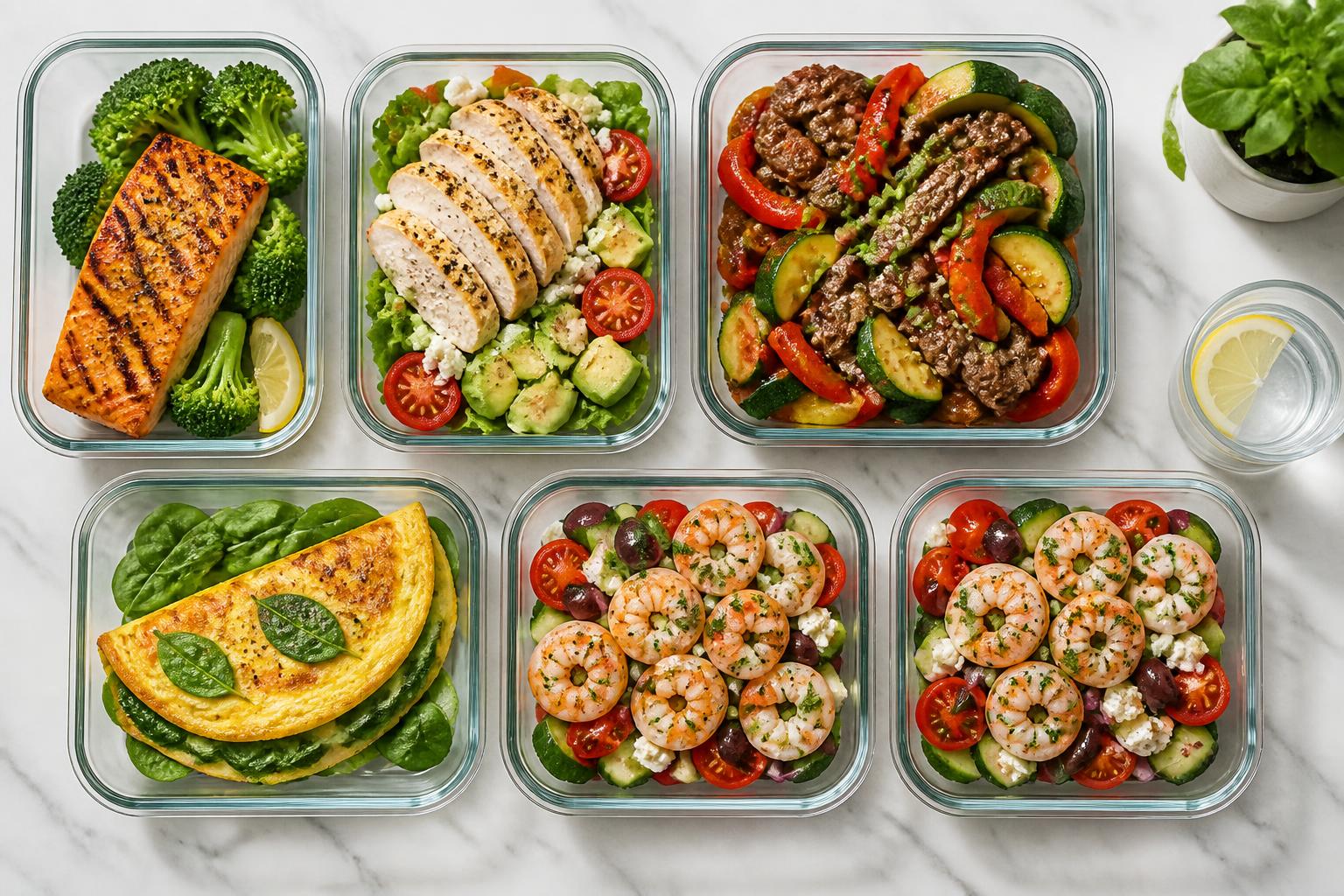
This plan is designed for one person. Each day is built around 30–40g of protein per meal and keeps net carbs between 20 and 30 grams. Track for the first week to build intuition — after that, most people can eyeball it.
Day 1
- Breakfast: 3-egg omelet with spinach and feta, black coffee
- Lunch: Grilled chicken over a large salad with olive oil and lemon
- Dinner: Baked salmon with roasted broccoli and avocado
- Snack: Cucumber slices with salt and olive oil
Day 2
- Breakfast: Greek yogurt (unsweetened, full-fat) with 2 tbsp raspberries and chia seeds
- Lunch: Turkey and avocado lettuce wraps with tomato and mustard
- Dinner: Beef stir-fry with bok choy, mushrooms, and zucchini in sesame oil
- Snack: Celery sticks with almond butter
Day 3
- Breakfast: Smoked salmon with cucumber, cream cheese, and everything seasoning
- Lunch: Leftover beef stir-fry over mixed greens
- Dinner: Roast chicken thighs with cauliflower mash and green beans
- Snack: 2 hard-boiled eggs
Day 4
- Breakfast: Tofu scramble with spinach, peppers, and olive oil
- Lunch: Tuna salad (olive oil mayo) stuffed in bell pepper halves
- Dinner: Pork tenderloin with sautéed cabbage and mushrooms
- Snack: 10 almonds or macadamias
Day 5
- Breakfast: 2 fried eggs with sliced avocado and sautéed tomatoes
- Lunch: Chicken soup with non-starchy vegetables and a side salad
- Dinner: Pan-seared white fish with asparagus and lemon butter
- Snack: Olives and a few cubes of hard cheese
Day 6
- Breakfast: Protein smoothie: unsweetened almond milk, protein powder, spinach, ¼ cup berries
- Lunch: Grilled prawns with Greek salad (feta, olives, cucumber, tomato, olive oil)
- Dinner: Slow-cooked beef with celery, mushrooms, and radishes (no potato, no carrot)
- Snack: Radish rounds with salt and butter
Day 7
- Breakfast: Bacon and eggs with sautéed mushrooms and spinach
- Lunch: Leftover slow-cooked beef with a side of leafy greens
- Dinner: Herb-crusted chicken breast with roasted zucchini and peppers
- Snack: One small square dark chocolate (85%+) or a cheese plate
Grocery list for Week 1
Protein
- Eggs (2 dozen)
- Chicken thighs or breasts
- Salmon, white fish, prawns
- Beef or pork tenderloin
- Bacon (nitrate-free)
- Greek yogurt (unsweetened, full-fat)
- Hard cheese, feta, cream cheese
- Tofu or tempeh
- Protein powder (low sugar)
Vegetables & fats
- Spinach, kale, mixed greens
- Broccoli, cauliflower, zucchini
- Bell peppers, bok choy, mushrooms
- Cucumber, celery, radishes
- Avocados, lemons, olives
- Berries (small punnet — ration ¼ cup/day)
- Extra virgin olive oil, sesame oil
- Butter or ghee
- Almonds, macadamias, chia seeds
Adapting the plan to medications and health conditions
- On insulin or sulfonylureas: at 20–30g carbs, glucose falls fast. Monitor closely and reduce medication with your clinician — often within the first two weeks — to avoid hypos.
- On GLP-1 medications: you may need smaller portions and less protein at once. Split protein across meals and stay hydrated.
- Kidney disease: protein targets may need to be lower. Check with your nephrologist before increasing protein.
- Pregnancy or breastfeeding: do not restrict carbs to 20–30g without medical guidance. Blood sugar targets are different in pregnancy.
What to expect
- Week 1: some carb-withdrawal fatigue for 3–5 days, then steadier energy, fewer cravings, and mild ketosis for most people.
- Week 2–3: fasting glucose starts falling. Waist size often shrinks. Insulin or sulfonylurea doses usually need to be reduced.
- Week 8–12: measurably lower A1C on your next lab. Many people are able to reduce or stop diabetes medication under clinical supervision.
Get your personal low-carb starting point
The free 3-minute Metabolic Comeback Score assessment shows exactly which eating levers will move your blood sugar fastest — based on your current habits, medications, and goals.
- Identifies your biggest glucose and insulin lever
- Based on the same 20–30g carb protocol as this 7-day plan
- Takes 3 minutes, no signup required
Frequently asked questions
Is a low carb diet safe for diabetics?
Yes, for most people with prediabetes and type 2 diabetes, reducing carbohydrate intake is safe and effective. It lowers post-meal glucose spikes and often reduces medication needs quickly. Anyone on insulin, sulfonylureas, or GLP-1 medication should work with their clinician to adjust doses as glucose improves — at 20–30g carbs per day this happens fast.
How many carbs should a diabetic eat per day?
On the Metabolic Comeback Method we target 20–30g of net carbs per day. That's low enough to drop insulin quickly, put most people into mild ketosis within a week, and produce measurable A1C improvements — while still leaving room for non-starchy vegetables and a small serving of berries. It is more disciplined than a general 'low carb' approach, and it works.
Can you reverse prediabetes with a low carb diet?
Yes. Prediabetes is reversible for most people. A 20–30g carb eating pattern, combined with a consistent overnight fasting window and protein at each meal, lowers insulin fast and restores insulin sensitivity. Many people move out of the prediabetic range within 8–12 weeks.
What is the difference between low carb and keto?
A 20–30g net carb intake is inside the ketogenic range and will put most people into mild nutritional ketosis. The difference here is that this is a food-first plan, not a macro-tracking exercise. You build every plate around protein, non-starchy vegetables, and healthy fats — the ketosis follows.
Can I eat fruit on a low carb diet for diabetes?
Berries only, and small portions — around ¼ cup per day maximum. Bananas, grapes, apples, oranges, dried fruit, and smoothies all break the 20–30g budget on their own and are best avoided while you are restoring insulin sensitivity.
Looking for the specific vegetable list? See Low-carb vegetables for diabetes for a complete guide to the best plate fillers.